Nature as Mirror
Leary-Joyce (2014) points out that the quality of coaching is in the coach ‘being’ rather than the coach ‘doing’. That’s a brilliant piece of advice for coaches, and especially those who work outdoors, as by us ‘being’ we allow nature in, to do some of the ‘doing’. In this article we take a look at how we can work with nature as a mirror. I cover the science behind why it works, some examples and how you can use this when working virtually.
EO Wilson the American biologist defined his theory of Biophelia as “the urge to affiliate with other forms of life”. When we were evolving we spent as much time interacting with other forms of life as we did with our own kind. It is therefore natural for us to have strong subconscious bonds with other living things. This inherent and unspoken of connection allows us to magically connect with nature in a way we perhaps don’t consider rational. Biophelia offers a short cut to our emotions and feelings through nature. Our systemic connection with living things opens the door to a whole new way of communicating.
There are many opportunities for clients to explore aspects of the landscape that match and illuminate their internal experience, let’s take a look at some:-
Metaphor
“The natural setting can of course, be a canvas on which to project and an opportunity to work with metaphor.” (Marshall, 2016). Visual metaphors are a short code that engage unconscious and complex understanding that sits beyond words and cognitive function. Metaphor is deeply personal so it’s a treasure hunt for the coachee.
“Metaphor is abundant in the outdoors…. the space offers a language for people that don’t necessarily know how to put words to their feelings…. In a place full of metaphor you can see what they’re drawn to and say ‘[in what way] is that relevant’” (Dr Ruth Allen, Ramblings 12/3/20)
Metaphor opportunities are endless. Some arrive just at the right time like the path vignettes below and some are blindingly obvious like the list below, while others are much more subtle or can be invited by you using inquiring questions [see after the path vignettes].
Bridges
The bridge from what to what?
The bridge between what and what?
Stepping stones
What are the first steps to X
What small steps can you take?
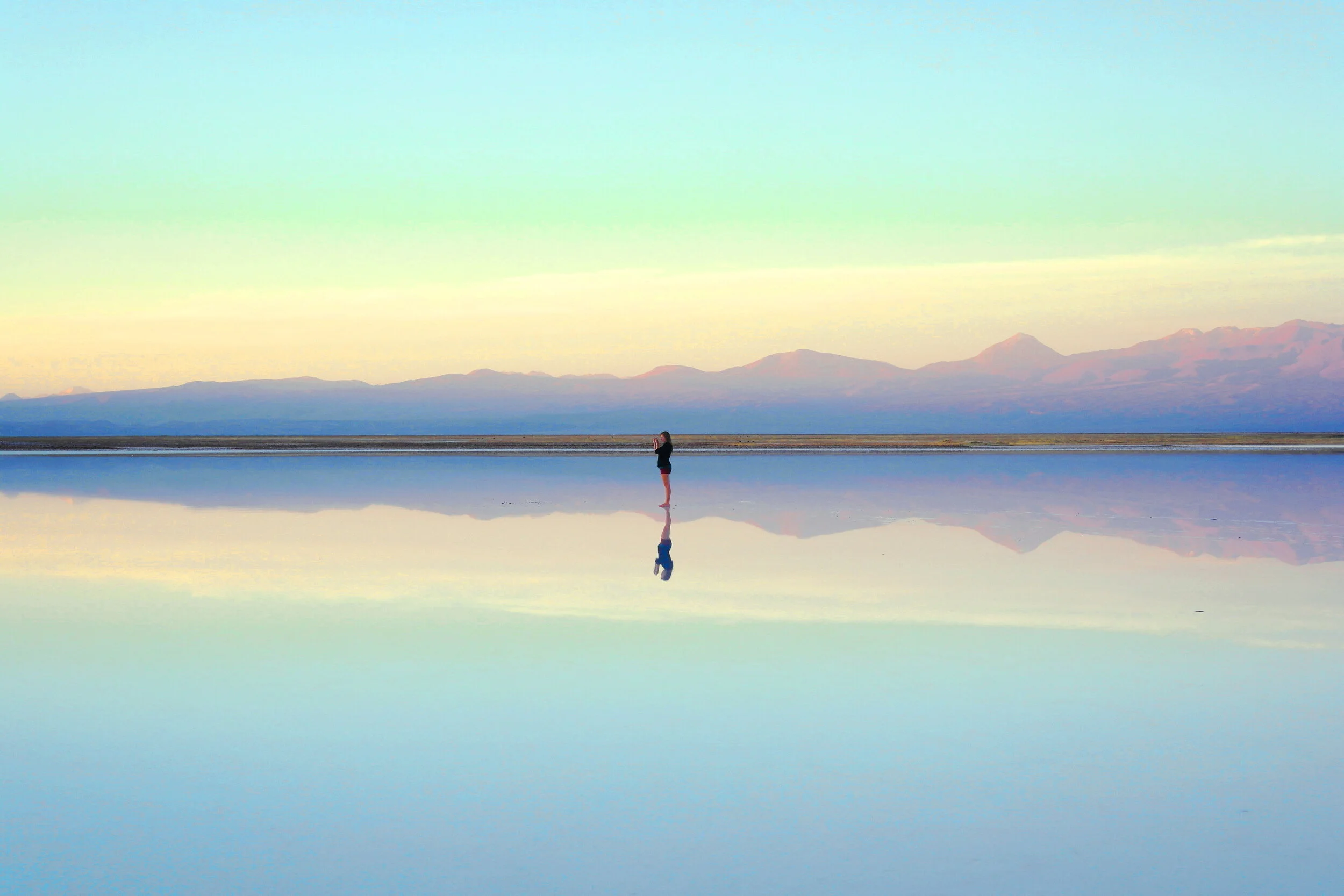
Water reflections
What do you see?
In what way is that relevant?
What reflections do you have on X, Y, Z
Path junctions
What was it that drew you to that path?
In what way is your choice for that path relevant to what’s going on for you right now?
Metaphor Vingnettes
Just as I had asked JP ‘How long can you continue in this way?’ we arrived at a clearing with views over the water. I knew the route and what was coming. We were walking companionably side by side, slowing to a stop at the junction. To our left was a path bordered by fields that took us to a bench at the water’s edge, to the right the path continued into the woods. I asked JP: ‘Which path would you like to take?’ aware that I was talking both about the route ahead and the metaphorical path. (Roberts, 2016)
I noticed this well-trodden path in the field & recognised how well this would have supported the conversation my client & I had been having. We were talking about limiting beliefs & how we have often reinforced them over time, until the belief is a habitual way of thinking & becomes our truth. Looking at this path, it appears that this is the way to cross this woodland & our default is to follow it simply because it’s well-trodden. Yet we can choose a different path if we want, a different belief & open up a whole new experience for ourselves… (Sam Clarke, Coach, 2020)
Inquiring Metaphor Question
Choose something that represents…
- How you feel
- This situation
- Your relationship to X
- How big the problem is
- The problem
- You now
- Where you want to be
Our opportunity as coaches is to observe and catch these metaphor gifts when they present themselves and integrate them into our work. Knowing when they will be adding value and insight and when it might be a distraction is a bit of a skill but with practice it gets easier and if it doesn’t go quite right then we learn from it.
Metaphor as Mirror
I’d like to share with you an example of when the metaphor experience can be a mirror (or parallel process in this case) to a lived experience.
While walking with a client one day a fat white sheep came ambling nicely over the path in front of us and then continued on past. I was so taken with it that I commented, a comment which was not in context at all with the conversation we were having, even worse, my client was mid-sentence! The client nodded and smiled about the sheep then went back to what she had been saying.
After the session I considered what had happened, both in was there any meaning to be taken from the sheep, and also in what possessed me to interrupt. Nothing came to me. Over the next few days my mind kept returning to it. Four days later, a lightbulb; my client is the sheep in her organisation/team – delightful and lovely, getting on with her own thing and all soft and gentle but not having an impact beyond getting her work done. What had happened with the sheep was a mirror for what was happening for her in the organisation. Noticed by some (in this case me) and un-noticed by others (in this case my client) and even when brought to my client’s attention, the sheep was paid little notice and the conversation resumed as if the sheep hadn’t existed!
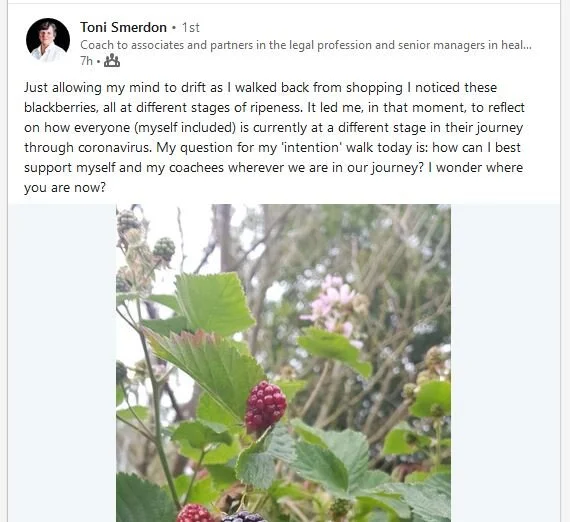
Finally, we can practice becoming more open to connecting with metaphors on our own walks, to allow nature to be our coach each time we step outside (free coaching, what a gift!). Here’s an example I took from LinkedIn:
So that’s a lot about metaphors, let’s look at some other ways that we can work with nature as a mirror.
Map Making
Using natural things to create a map or picture of:
events
the problem
the challenge
the issue
desired outcome
how you feel
Inviting elements of nature to mirror the internal emotional or cerebral landscape. A picture creates a thousand words, once created the image can be used by coach and client to jointly explore what they see before them. You could also invite them to photograph their creation.
Constellations
When coaching we talk about constellations as a map of the system and how things relate to each other. I wonder how often we consider that the term constellation, to most other people, relates to groups of stars!
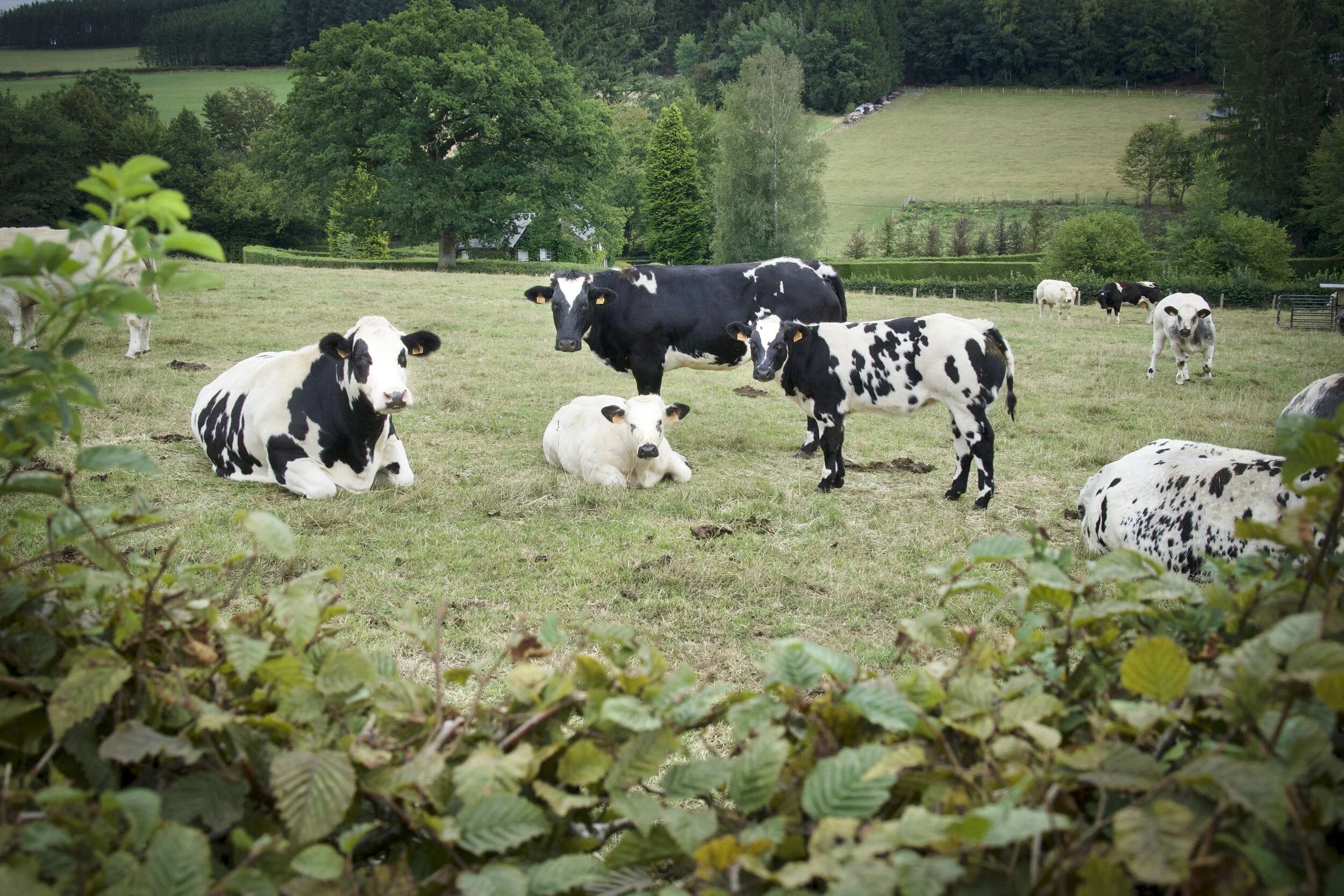
Nature offers many things that can be used for constellations explorations. As the client describes their situation you could invite them to choose some natural groups to work with eg. a flock of sheep, gaggle of geese, herd of cows, trees in the woods etc. or to select some objects that represent each ‘player’ then use them to inquire :-
What drew you to X to represent Y
If you were to place yourself here, where would you be?
And others?
How is that?
What do you see?
What’s that like?
What position would you like to have?
Or a wood for a systems view
Pick a tree that represents you
Pick a tree for each person or department that is relevant to the topic
The organisation
Then enquire into the system
What do you notice?
How is that for you?
How would you like it to be?
What happens when you view it from a different perspective?
Working Virtually
Good news for these times of virtual working because ‘nature as coach’ lends itself to your client taking walks without you and you both then reflecting on what they found, in your virtual sessions. The key is for the coachee to be open to it and let nature in to do a little coaching. Here’s a vignette from coach Caroline Hampson, one of our previous course participants.
So as much of my coaching is done remotely I wanted to explore what would happen if I invited a coachee to take a walk with a question to ponder. And, ask them to reflect on what they see in nature that gives them some insights into their challenge. Here’s what happened:
My client chose to walk with; “why can I be so focused on creating, innovative ideas but get stuck when it comes to promoting/ selling them?”
I noted the beautiful gate with a view at the start of the walk as a good place to reflect at the end of the walk.
I walked from bright sunlight into shady woodland and reflected on the pleasant change... that made me realise I find it more comfortable “living in the shade” than being the one out in light... links to loving the innovation and creativity but struggle with the promotion
Two paths - which one do we take? The map comes out and I’m happy to let hubby decide on the route... how would it feel if I read the map and made the decisions- I’d soon learn from my mistakes.
Last thoughts;
We don’t need to try too hard with any of this. I’ve got quote after quote from all the programmes I’ve run where coaches share examples of what they’ve learnt from nature when they’ve taken their own walks outdoors. It’s as simple as going for a walk and letting nature do some of the coaching. For us coaches that means letting go a little of the process and placing a trust in nature, even at times stepping out of the way.
References:
Leary-Joyce, J. (2014). The fertile void: Gestalt coaching at work. St Albans: AoEC Press
Roberts, J. L. (2016). How are we in nature and how does it shape the quality of our coaching conversations? MSc Dissertation. Unpublished

Lesley holds an MSc in Executive Coaching from Ashridge Business school and she has 16 years commercial experience with Mars. She holds an EMCC Senior accreditation. Read More >
She is the author of ‘Coaching Outdoors; the essential guide to partnering with nature in your coaching conversations’.
Contact by calling +44 (0) 7799 581792 or email info@coachingoutdoors.com.