
Clothing & Kit for Coaching Outdoors
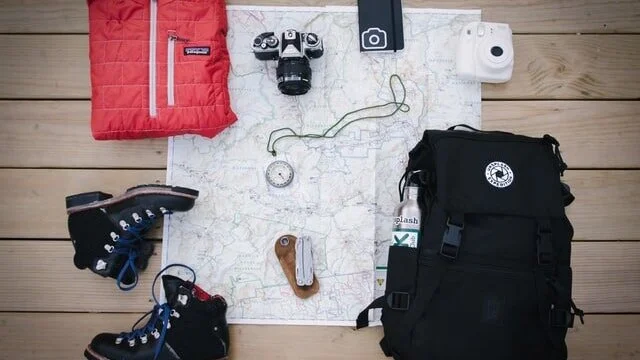
Well, you’ll be pleased to know that there’s not much different to coaching indoors and no one gives you any advice on what to wear there, so you’ll find this short and sweet.
Does my bum look big in this?
The main consideration for what you wear is that you make sure you are comfortable, so that you can give your full attention to your coachee. You don’t want to be worrying about being too hot, too cold, having a blister, etc. So, first things first – what’s your Achilles heel and how do you avoid it? I am always cold, so I wear plenty of layers. Even in summer you’ll find me with layers on that I can easily remove and I love tops that zip all the way, as I can then pull them up for warmth or down for ventilation. My neck is always cold (perhaps my age!) so for most of the year I have something that fits snugly around it - either a polo neck, a mid-layer that zips up quite high or a buff. You can’t beat a buff. Scarves are all very lovely, but they require a bit more maintenance (all that flapping and winding round) and I find they take up too much room inside a jacket. It’s all personal preference though - I can hear scarf fans shouting ‘long live the scarf’ in the background!
Lastly, again as I’ve got older, I’ve found that I don’t like cold wind in my ears and that I get a headache if I get too cold, so I wear a hat in winter. I’m still on the hunt for the perfect hat - I’ve gone through a few. My criteria is that it has to cover my ears, be able to fit neatly in my pocket if I get too hot and look reasonable when on.
If blisters are your Achilles heel (pardon the pun), make sure you are in your most comfortable shoes and if you have bought new ones, that you try them out before your client session. It is too difficult to ignore the burning sensation at the back of your heel whilst aiming to be ‘fully present’ for a coachee!
And you thought this was easy and that all you had to do, was pop on a pair of appropriate shoes and off you went. I didn’t tell you at the beginning that I was going to blether on about my age and woolly hats - you might not have read this far.
A must for everyone is a good thermal. You can’t beat them. Something snug that will keep you warm if you find yourself sitting with clients on a bench, and yet is breathable and works with your body temperature so that you don’t overheat if you are moving. Merino wool is great, so look out for that. Another good staple is a polo shirt. They always look smart and can be added to in winter for warmth or worn on their own in the summer. Talking about summer, beware of nettles and ticks! While shorts / skirts may be great in the sunshine, they do not lend themselves to protecting your legs. It’s also a good idea to let your client know if you are walking somewhere with things that sting or bite, so that they can choose their clothing appropriately too.

Lastly on the clothing front, take a waterproof (or at least a ‘shower proof’), because there will be days where you don’t quite know what the weather is going to do - and it’s good to be dry. If in doubt take a waterproof jacket. If you choose wisely, you’ll only need one, which can be worn all year round. A thin shell is best, then you can layer up underneath for warmth in the winter, or just wear it over a lightweight top in the summer. If it does rain, I have found a baseball cap hugely useful to wear instead of putting my hood up. Hoods cover your ears making it harder to hear your coachee and they cut out your peripheral vision which makes things quite a bit harder when you are walking side by side. In light rain a baseball cap prevents that and as an added bonus, if you are a glasses wearer, it keeps them dry too. None of this has to be expensive. You probably already have appropriate things in your wardrobe; it’s just a case of finding them and striking the right balance between professional and practical. Clearly an office suit and shoes would be impractical while full hiking kit seems extreme and would probably scare your coachee!
Water, water everywhere…
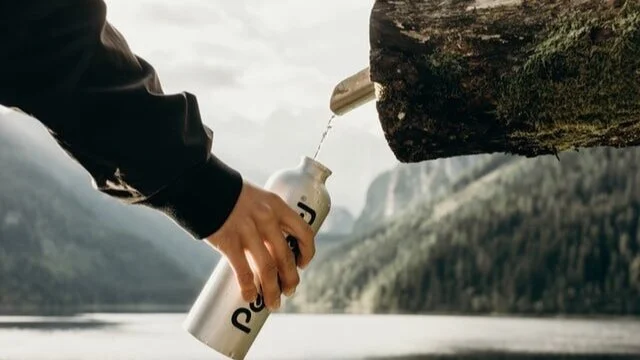
Will you feel better if you have a drink of water with you? Some people have a drink with them wherever they go. If this is you, then take water. Others would find that a water bottle gets in their way – then don’t take one. Personally, I like one with a loop so that I can carry it easily, and an open neck so that I’m not sucking through a straw; taking ages and making a racket! Some days I take water, some days I don’t.
If it’s going to be a hot day and you have a water bottle then either mention it to your client or take one for them. Otherwise you risk appearing inconsiderate and possibly unethical.
The future is bright…
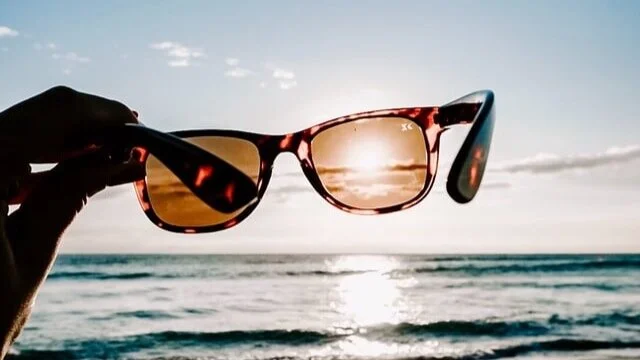
To sunglasses or not to sunglasses? I’m still not sure. Squinting into the sun is not a good look and gives me a headache, but having my eyes covered whilst coaching feels like I’m placing a barrier between us. There’s something important about eye contact for engendering trust (there’s lots of research on this but as this article is a little light-hearted, I won’t bore you). At the moment I don’t have the best solution. I wear them and then they are invariably up and down like a yoyo! Personal choice really.
Paper & Pen?
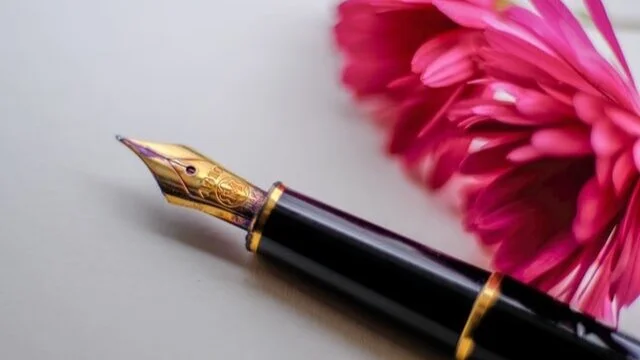
“Tell me, how do you manage to recall the summary of what was discussed on a walk and talk coaching session if you don’t write anything down?” (Colleague, October 2019). This is one of the questions I am asked most often. Here’s my response: I trust that I have all the resources I need (NLP belief) to recall everything that is relevant from the session. As soon as I get back to my car, I get out a pen and paper and scribble away. I have found that my recall is really good and that I can not only recall the main facts but that I remember key moments and my felt experience much more clearly than when I am indoors taking notes. It works for me and I believe it is because there is more of me available to the coachee due to not being focused on writing.
So what about the coachee? I have a little stash of small note books and small pens (both pocket size) and, on the first walk with each new client, I have one in my pocket to offer them. As I’m writing this, I realise that I could offer it earlier (in the contracting phase) as it may be something they are concerned about regarding being coached outdoors. [Ooh I love it when a lightbulb goes off, even if I do feel a bit stupid for not having thought of it before!] Of all the coachees I have offered this too, 2 have taken it up. One of them writes a lot and we often stop for her to write things down. Mostly we stop to sit on a bench while she writes, but with a small, good quality hardback notepad, it’s also easy for her to write while standing.
Bags of style
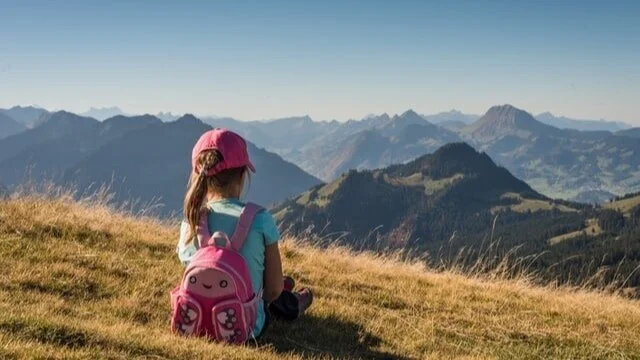
Finally, bags. To take one, or not to take one? If you do, what kind? You’ll be unsurprised by this point to find that there is no right answer. There is however a practical answer. If everything you want to take fits comfortably in your pockets then great – no bag required. If it doesn’t, then you’ll need a bag. Mostly I don’t take a bag. If I do then I either take a very small rucksack or (now don’t laugh) a small, subtle handbag with a long cross body strap. I can hear you laughing - I said no laughing! So, along with my technical rain jacket, merino wool base layers and approach shoes [Did I forget to mention shoes? We’ll come back to that], I also, on occasion, take a rather natty handbag.
There are a few good reasons… it’s small and just the right size for the few bits and bobs that need to fit in it and never any bigger (I don’t put my water bottle in a bag, I carry it - it’s too disruptive to keep opening a bag to take it out), it’s leather so reasonably waterproof, I have a concern (perhaps unfounded, I’ve never tested it) that a rucksack will scare people into thinking I’m going to take them up a big hill instead of a little pootle, and the long cross body strap is incredibly comfortable, never slips, doesn’t need adjusting or hitching up and never gives me sore shoulders.
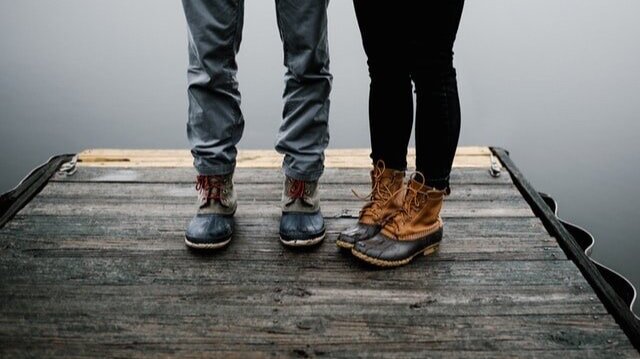
Moving swiftly on, I forgot footwear.
Rule number 1 – whatever is comfortable. Then consider your terrain – is it muddy? Is it wet? Is it both? Is the path uneven and stony? Do you get blisters? Do you have bad ankles? And the weather; is it likely to rain? Is it frosty and therefore slippery? Will you get cold feet? Has it been snowing? I once went plodding through ankle deep snow with a client; it was amazing - we had the best session making footprints in virgin snow, surrounded by silence and sparkling white - the metaphors available were incredible. I digress, back to footwear - pick what suits your need. I have 2 mainstays; a pair of approach shoes which are like robust trainers and a pair of knee length winter boots. Both are incredibly comfortable, robust and waterproof. On occasion, if it’s very muddy (or on that day in the snow), I wear leather walking boots and in the summer I wear trainers.
It’s also worthwhile considering socks; good quality thick walking socks keep your feet warm in winter but do they fit in your shoes? And in the summer little socks are great, but I find that if they are too short, my shoes eat them and that tiny stones flick into them too easily and then I’m forever stopping to pick them out, so for me they need to have a little bit of length..
None of this it too serious or critical. The key objective is that your clothing and kit supports your work and doesn’t get in the way. I’m always learning about what works and what doesn’t.
Wear and take, what works for you.
Lesley

Lesley holds an MSc in Executive Coaching from Ashridge Business school and she has 16 years commercial experience with Mars. She is an EMCC Senior Practitioner Read More >
She is the author of ‘Coaching Outdoors; the essential guide to partnering with nature in your coaching conversations’.
Contact by calling +44 (0) 7799 581792 or email info@coachingoutdoors.com.