
Talking Whilst Walking (Heather Langton)
Heather Langton
28th June 2019
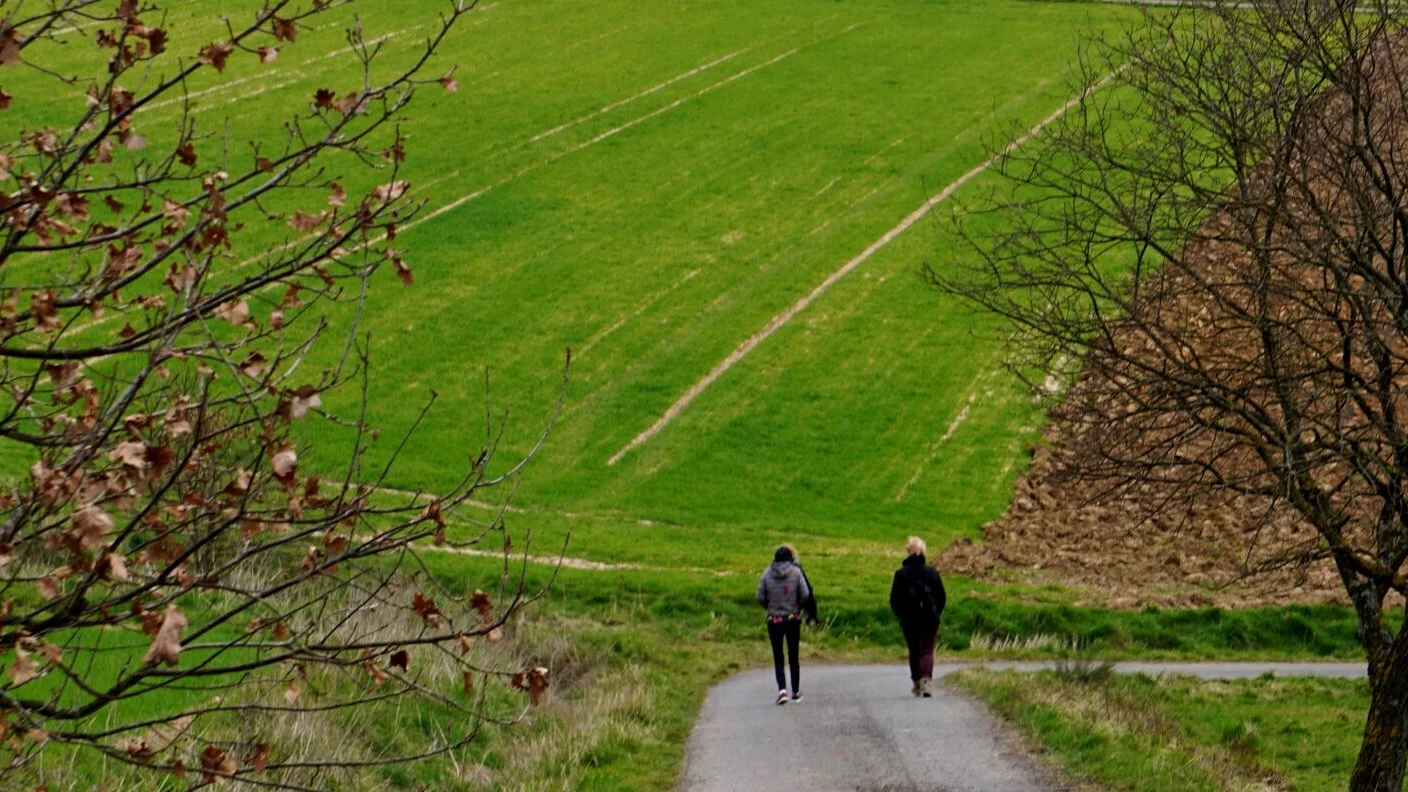
A growing number of coaches believe that it is more productive having open discussion when outside in the natural environment. Recently, I have been thinking about why this is and want to share two separate experiences with you.
The first was a walk with a family member and the second for work. One leadership and one development coaching. One through beautiful Shropshire woodland with the trees dappling the sunlight on the ground as we walked and the other a short walk up to a beautiful Lake District tarn for a swim.
Both discussions comprised of me listening much more than talking and provided little need for prompting, enabling me to use the open non-directive coaching style I love.
On both occasions during the conversation there were several similar key aspects:
On each occasion the other person very quickly and naturally opened up. The silences were not uncomfortable because, when we were not talking we were walking or sitting looking at the view, so again no pressure to have to say anything.
On each occasion the other person naturally reflected: “I haven’t thought of the situation like this before” and “I have answered my own question, haven’t I” and both had moments of “I know exactly what I need to do now”.
The general flow of each session was smooth, and my subjects came through with their thinking much more easily.
As we walked, we took time to breathe in the fresh air, enjoyed the silences and sounds of nature, we interspersed the coaching conversation with pointing out interesting flowers or plants or birds and this seemed to clear our heads and reduce the pressure to be too formal on either side. I got the impression that each was able to talk about their feelings in a more meaningful way through being relaxed in the natural environment.
On both occasions we sat for a while and just enjoyed the view. This seemed to give thinking time and allowed each to create a semblance of order and control in their situations.
In discussion at the end:
Both said they were less apprehensive before the conversation than they usually were in a formal environment.
Both said they felt calm and positive and ready to take the actions that they had created.
Not having direct eye contact allowed them space to think, unlike in a traditional coaching situation, sitting across a table from one another or in a coffee lounge style setting.
Both were full of proactivity and have contacted me since with really positive outcomes.
From my point of view as the coach:
o I feel I can ask the right questions with better timing to draw thinking when there is only fleeting eye contact.
o I feel more in touch with how the person is feeling and their reaction as we walk and talk or don’t talk.
o I can tailor what we do to the situation, if I feel we need a moment we can stop and sit, if I feel the person needs space I can walk ahead or behind or if sitting by a lake I can wander along the edge as they sit without it feeling awkward at all.
o I am able to build in an experience like having a paddle, just dipping our fingers in to the water, watching a bird in flight and discussing or playing poo sticks if I feel it will add value and encourage creative thinking.
There are several pieces of research which highlight the benefits of being out in nature:
Neuroscientist David Strayer has conducted decades’ worth of research on the psychological and cognitive effects of the outdoors. He has found time in nature enhances higher-order thinking, restores attention, and boosts creativity. In a 2012 study, Strayer found that backpackers were 50 percent more creative after they had spent four days out on the trail. Read more here: outsideonline.com/2062221/new-science-creative-brain-nature)
Researchers at the University of Essex found that, of a group of people suffering from depression, 90 per cent felt a higher level of self-esteem after taking a walk through a country park, and almost three quarters of the group felt less dispirited after the walk.
Last year, GPs on the Shetland Islands began issuing ‘nature prescriptions’, which instruct patients with chronic conditions to take strolls on beaches and moors, with a list of bird and plant species to look out for as they wander.
Apparently, running water is full of negative ions which are said to bring energy and vitality. So, sitting by a stream or waterfall can be really energising.
Counsellor Malachy Dunne suggests that being outdoors is beneficial for our mental health because it, quite literally, returns us to our natural environment. ‘As a species, we’ve spent a lot more time walking outdoors, hunting and gathering, than we have either growing crops or making machines,’ he explains. ‘So, we are reconnecting with an ancient memory.’
The landscape is a constant presence and, pausing to notice the sunlight slanting through the trees, the stillness of the water and a robin hopping ahead of us brings another dimension to our conversation. (Alice Wright, Psychologies magazine, May 2019)
In conclusion
Any environment that gets you back to nature, provides space to think and reduces the pressure of finding a solution is helpful, no matter whether you are coaching a business leader or counselling a family member.

Heather Langton, 28 June 2019.
Excerpts from Heather Langton’s article published on LinkedIn, June 28 2019.

Lesley holds an MSc in Executive Coaching from Ashridge Business school and she has 16 years commercial experience with Mars. She holds an EMCC Senior accreditation. Read More >
She is the author of ‘Coaching Outdoors; the essential guide to partnering with nature in your coaching conversations’.
Contact by calling +44 (0) 7799 581792 or email info@coachingoutdoors.com.